
When a roofing contractor says "we can handle the financing for you," it can feel like the storm clouds just parted. One less phone call, one less lender to research, one less thing to worry about. And sometimes that is exactly what contractor financing for roof replacement really is — a legitimate product from a real lender, offered at a fair price, with terms that match what was said out loud. But in my decade of reviewing contractor payment plans for roofing and other home improvement jobs, I learned that the difference between a good plan and a sales trick is rarely visible from the outside. It only shows up in the information you are given — or not given — before you sign.
What a Legitimate Payment Plan Looks Like
A good contractor financing offer has a recognizable shape, and once you know the shape, it is hard to mistake. Legitimate plans are built on transparency, which sounds like a soft word but shows up in very concrete places: named lenders, written numbers, and contracts that say the same thing the salesman said in your living room. When I was advising homeowners, I could usually tell within the first few minutes whether a plan was going to hold up under scrutiny, because the good ones never minded the scrutiny.
A real lender with a name and a phone number
Contractor financing almost always runs through a third-party lender, and a legitimate plan names that lender clearly. The paperwork should show a finance company you can look up, with a phone number and loan documents in that lender's name, not just the contractor's. Vague language like "our financing department" or "in-house terms" deserves a follow-up question: who exactly is lending me this money? If the answer is a real, identifiable lender, that is a strong sign the plan will behave like a real loan — with real disclosures.
Written terms before you commit
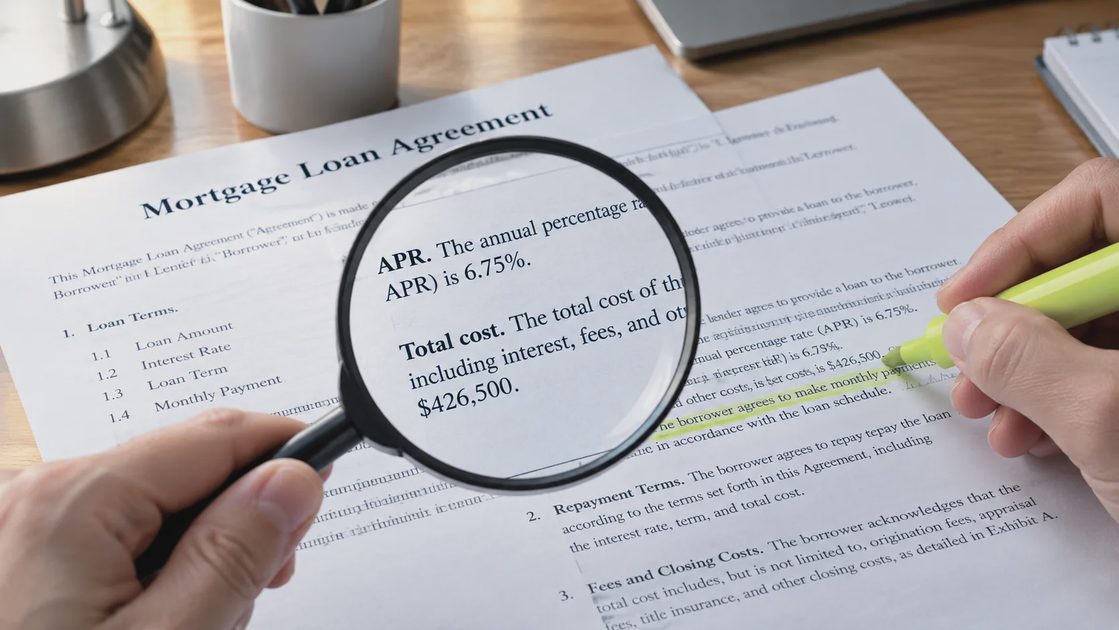
Before you agree to anything, a legitimate plan gives you the APR, the loan term, the monthly payment, and the total cost in writing. Those numbers should match what was quoted out loud, and you should be allowed to take them home. In my experience, honest contractors hand over the paperwork without being asked twice. They know the numbers survive a second look, so they are not nervous about you taking one.
Green flags worth looking for
A named third-party lender appears on the documents, with contact information.
The APR, term, monthly payment, and total cost are written down before you commit.
The contract matches the verbal pitch — no new fees appear at signing.
You are free to take the paperwork home and compare it with other offers.
Nobody pressures you to decide before the quote "expires" this afternoon.
What a Sales Trick Looks Like
A sales trick is not always a lie. More often it is the truth with the expensive parts left out — a low monthly payment with no total cost attached, a no-interest promotion doing double duty as a distraction, a deadline that exists only in the salesman's calendar. I have watched these patterns repeat for years, and they are consistent enough that they read like a script. The good news is that a script is easy to recognize once you know the lines.
The low payment with no total cost
The oldest trick in the financing book is leading with a monthly payment and never mentioning what the loan costs in total. A payment of "about $199 a month" sounds manageable until you realize the loan runs for many years, or the job price was padded to make the promotion work. The way to test it is simple: ask for the total cost in writing. A genuine offer gives you the number; a trick changes the subject.
The no-interest promotion that pays for itself
Deferred interest and same-as-cash promotions are real products, but they are also where inflated pricing sneaks in. If the contractor raised the job price by several thousand dollars and then offers "no interest for 12 months," the discount you think you are getting may already be baked into the quote. And if the balance is not paid in full before the window closes, the interest that was "deferred" comes due all at once, calculated from the original date. That is why the questions to ask are about the price of the roof itself, not just the interest.
Pressure, vague names, and blanks
The fastest way to tell a sales trick from a real offer is to watch what happens when you slow down. A legitimate contractor lets you think. A trick treats hesitation as a problem to be solved — the quote expires tonight, the crew needs an answer, the promotion ends when you walk out the door. Add a lender whose name you cannot quite pin down, or contract blanks left to be filled "later," and you have the complete picture of a pitch designed to close before questions can form.
Red flags worth walking away from
A monthly payment is quoted with no total cost and no APR in writing.
The roof price seems higher than comparable quotes, and a promo is used to distract from it.
You are pressured to sign before the quote expires or the "deal" disappears.
The lender's name is vague, or the contract does not identify who is lending the money.
Blanks are left in the contract to be filled in after you sign.

What They Say vs. What You Should Check
Putting the pitch next to the check makes the pattern obvious. Here is how I coached homeowners to listen during my advising years — hear what they say, then check what it means.
What the pitch says | What to check before you sign |
|---|---|
"We'll handle the financing for you." | Which lender? What APR, term, and fees — in writing? |
"No interest if paid in 12 months." | Is it deferred interest? What is owed if it is not paid off in time? Was the roof price raised to pay for the promo? |
"The payment is only about $X a month." | What is the total cost? How long is the term? What rate is behind the payment? |
"This offer is only good today." | Why the deadline? Can you take the contract home and compare it with other quotes? |
A Scene I Sat Through More Times Than I Can Count
During my years reviewing payment plans, I lost track of how many times I watched this unfold: a homeowner, still rattled from a storm, listening to a smooth pitch at the kitchen table. The payment number sounded wonderful. The homeowner was tired, the roof was leaking, and the contractor had been so helpful. Then someone asked for the total cost — and the room got quieter. The contractor reached for the rate instead of the answer, or the payment had quietly been built on a term nobody had mentioned, or the price of the roof itself was well above the neighbor's quote for the same work. Almost always, the homeowner was not being swindled in the dramatic sense. They were being rushed past the one number that mattered.
That is the pattern worth naming: contractor financing for roof replacement is not the problem. The problem is signing for a plan when the full picture has not been put on paper. Homeowners who took the contract home, compared it, and came back with questions almost always got a better result — sometimes from the same contractor, sometimes from someone else entirely.
The Plan Isn't the Problem — the Missing Information Is
After all these years, my position on contractor-offered financing is simple: use it if the numbers are honest. A clean plan from a real lender can be the smoothest way to get a damaged roof replaced quickly, especially when the insurance clock is ticking. But the plan only deserves your signature if it comes with the full set of facts — written APR and term, a total cost you can see, a contract with no blanks, and enough time to think it over.
The good plans and the sales tricks look similar from across the table. They separate only when you ask the second question: what is this really going to cost me? So before the pen comes out, get the numbers in writing, take them home, and run them past someone you trust. Before you sign, make the payment make sense. If a deal only makes sense in the salesman's mouth and not on paper in your kitchen, that is your answer.