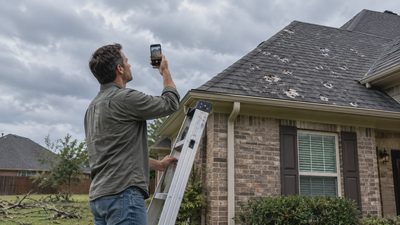

If a storm damaged your roof, the phrase aop deductible may appear in your insurance documents, estimate, or claim conversation. AOP usually means “all other perils,” which is a category used for covered losses that are not caused by wind or hail. The aop deductible is the amount you pay before your insurer contributes toward a covered claim under that category. It can change the amount of cash you need at the worst possible time, so do not judge a roofing quote by the monthly payment alone.
What an aop deductible means in plain English
Home insurance policies often separate deductibles by the cause of damage. A policy might have one deductible for general covered losses, another for wind or hail, and sometimes a separate percentage deductible for hurricanes or named storms. The aop deductible commonly applies to losses such as fire, theft, vandalism, or certain other covered events. The exact definition depends on the policy language and state rules.
Here is a simple example. Suppose your policy has a $2,500 aop deductible and an approved roof repair costs $14,000. If the loss falls under the AOP category, you generally pay the first $2,500 and the insurer considers the remaining covered amount, subject to policy limits, exclusions, depreciation rules, and claim approval. The aop deductible is not a fee paid to the roofing company, and it is not something a contractor can legally erase by changing the invoice.
That last point matters. A contractor who promises to “cover your deductible” or inflate an estimate to make the deductible disappear is giving you a reason to stop and ask questions. Insurance fraud can create serious problems for the homeowner, including claim denial or policy trouble. A legitimate contractor can help document damage, but the insurer determines coverage and the deductible remains your responsibility.

How the deductible changes your roof budget
The number I would look at first is the gap between the insurance payment and the final contract price. Imagine a $19,500 replacement estimate with a $2,500 aop deductible. If the insurer approves the full scope, the homeowner may still need to bring $2,500, while the insurance proceeds cover the eligible balance. If the contractor discovers code upgrades, damaged decking, ventilation work, or upgraded shingles, those items can add another $1,000 to $4,000 unless the claim includes them.
A low monthly financing payment can make that gap feel harmless. For example, financing $4,000 over 24 months at a high interest rate can produce a payment near $190 per month and a total repayment well above $4,500. A longer 60-month term might reduce the payment to roughly $85, but the total interest can be substantially higher. Ask for both numbers: the monthly payment and the total amount paid.
Insurance checks can also create timing confusion. Some policies pay actual cash value first and release recoverable depreciation after repairs are completed and documented. That second payment is not guaranteed until the insurer confirms the required work. Do not spend a future insurance payment before you understand the paperwork and deadline.
AOP versus wind and hail deductibles
AOP and wind or hail coverage are not interchangeable labels. If hail caused the damage, the claim may use a wind or hail deductible rather than the aop deductible. In some states, wind and hail deductibles are a percentage of the home’s insured value. A 2% deductible on a home insured for $350,000 would be $7,000, which is very different from a flat $2,500 deductible.
The declarations page usually shows the deductible amounts, but the claims representative can explain which one applies to a reported loss. Ask the question directly: “Which deductible applies to this cause of loss, and is it a flat dollar amount or a percentage?” Write down the answer, the claim number, and the name of the person who provided it. If the roof damage is disputed, pay for an independent inspection before committing to a large financing contract.
A contractor’s opinion is useful for describing missing shingles, exposed underlayment, bruised shingles, or water entry. It is not a substitute for the policy’s coverage decision. Keep photos, inspection reports, invoices, and emails together in one folder.

Ways to handle the deductible without overpaying
Start with cash flow, not sales pressure. If you have $1,500 available and owe a $2,500 aop deductible, the actual financing need may be $1,000, not the entire roof price. Confirm when the contractor expects payment and whether the insurer’s check goes to you, the mortgage company, or both. Some lenders place insurance proceeds in an escrow process, which can delay access to funds.
A personal home-improvement loan can offer a fixed rate and predictable payments. Contractor financing may be convenient and sometimes includes a promotional rate, but read the deferred-interest language carefully. “No interest if paid in full” can mean interest is calculated from the purchase date and added if the balance is not cleared by the deadline. A home equity loan may offer a lower rate, but it uses your home as collateral and often takes longer to arrange.
Compare a $2,500 balance at three possible terms. A 12-month plan with no interest costs about $209 per month if there are no fees. A 24-month plan at 12% APR costs roughly $118 per month and about $2,830 overall. A 36-month plan at 18% APR costs roughly $90 per month and about $3,240 overall. These are illustrations, not quotes, but they show why the aop deductible should be treated as a real project cost.
Questions to ask before signing
Ask the insurer to identify the covered cause of loss, the applicable deductible, the approved scope, and any depreciation being withheld. Ask the contractor whether the price is fixed, what happens if decking is damaged, and whether permits, disposal, flashing, ventilation, and code-required work are included. Ask the lender for the APR, origination fee, late fee, prepayment terms, promotional expiration date, and total repayment amount.
Never sign a completion certificate before the roof is finished and inspected. Do not let anyone pressure you to assign insurance benefits without understanding what rights you are transferring. If an estimate contains vague allowances or unexplained supplements, request a line-by-line explanation. A clean contract should make it obvious who pays the deductible, when payments are due, and what happens if the claim is reduced or denied.
A practical plan for the next 48 hours
First, photograph the roof, ceilings, gutters, and any interior staining from multiple angles. Second, locate the declarations page and mark every deductible, especially the aop deductible and any wind or hail amount. Third, obtain at least one detailed roofing estimate and compare its scope with the adjuster’s report. Fourth, calculate the cash gap using only approved insurance proceeds, money you already have, and a loan payment that fits your budget.
Finally, take a quiet evening to review the contract. A roof is urgent when water is entering, but urgency is not a reason to accept confusing financing. The right question is not simply whether you can afford this month’s payment. It is whether the full project cost, deductible, interest, insurance timing, and repair scope all make sense together. Before you sign, make the payment make sense.