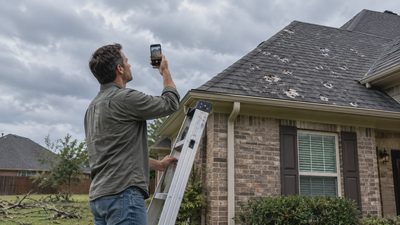

When a storm damages your roof, roofing insurance claim estimating is the bridge between a contractor's proposal and the amount your insurer is willing to pay. The numbers can feel disconnected: one page lists shingles, flashing, and labor, while another shows a deductible, depreciation, and a smaller check. Before you agree to a repair schedule or borrow money for the gap, learn what each number means and which questions deserve a clear answer.
A roof claim is not simply a contest between the homeowner and the roofing company. Your insurer usually sends an adjuster to document covered damage and prepare an initial estimate. The contractor then reviews that scope, identifies missing work, and may submit a supplement. Your job is to compare the documents and understand who is responsible for each dollar.
What a roof insurance estimate actually includes
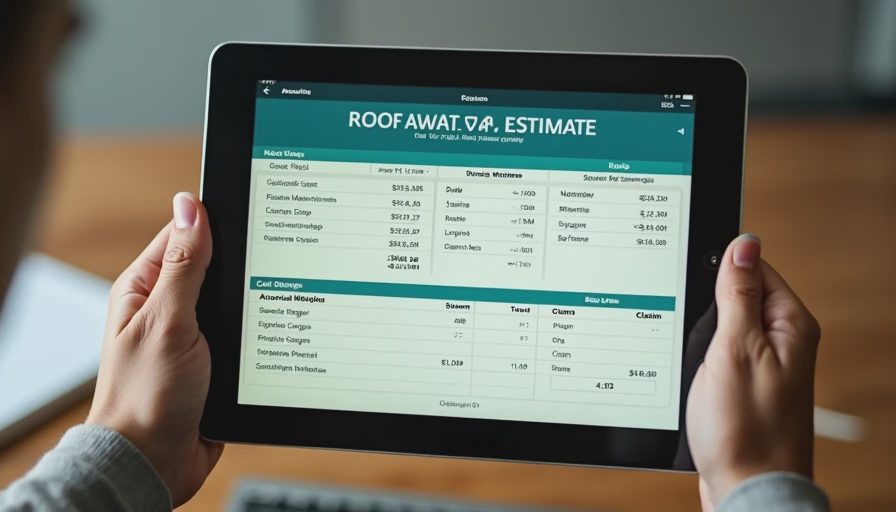
A typical estimate breaks the project into line items. You may see roofing squares, underlayment, starter shingles, ridge caps, ventilation, drip edge, flashing, ice-and-water barrier, removal, disposal, permits, and labor. One roofing square represents 100 square feet of roof surface. A 2,000-square-foot roof is not automatically a 20-square estimate because slopes, waste, valleys, and attached sections affect the measured area.
The estimate should also show the pricing system used by the insurer, often a regional database that assigns common labor and material costs. That price may not match a contractor's written bid exactly. A difference does not automatically mean someone is dishonest, but a large gap needs an explanation. Ask whether the contractor is pricing a required building-code item, a different material grade, or an upgrade that the policy does not cover.
Coverage type matters just as much. Replacement cost coverage, often called RCV, is designed to pay the cost of replacing damaged property with similar materials after the work is completed, subject to the policy. Actual cash value, or ACV, subtracts depreciation for age and condition. For example, a $16,000 roof with $4,000 in depreciation could produce an initial covered amount of $12,000 before the deductible. That is why the first check can look smaller than the approved project total.

The numbers to check before hiring a contractor
Start with the insurer's approved scope, not the contractor's monthly-payment pitch. Find the total replacement cost, recoverable depreciation, nonrecoverable depreciation, deductible, and any amount listed as excluded or not covered. Then place those figures beside the contractor's proposal. Roofing insurance claim estimating becomes much easier when both documents use the same roof sections and quantities.
Your deductible is the portion you pay under the policy before insurance pays its covered share. If the project is approved for $18,000 and the deductible is $2,500, the insurance-related portion is not a free $18,000 budget. Some policy payments are issued in stages, especially when depreciation is recoverable. The final depreciation payment may require invoices, photographs, or proof that repairs are complete.
Do not assume every item on a contractor's bid belongs in the claim. Gutters, upgraded designer shingles, full replacement of undamaged siding, and interior repairs may require separate coverage decisions. Ask the contractor to mark each line as approved, pending supplement, upgrade, or homeowner responsibility. That simple labeling can prevent a $3,000 surprise near the end of the job.
In roofing insurance claim estimating, measurements deserve special attention. Aerial measurements can miss a low-slope section, detached garage, chimney flashing, or difficult access area. Walk the estimate line by line with the contractor and ask for photos supporting any added work. A professional supplement is more persuasive when it connects a missing item to visible damage, a code requirement, or the actual construction method.
How supplements and disagreements work
A supplement is a request to add legitimate work or cost that was not included in the original estimate. Common examples include extra layers of tear-off, damaged decking discovered after shingles are removed, code-required ventilation, or flashing replacement that becomes necessary during repair. A supplement is not a blank check for every preferred upgrade.
The contractor should send supporting information to the insurer rather than promising that every request will be approved. Keep copies of the original estimate, revised scope, photographs, invoices, and written messages. If the insurer rejects an item, ask for the reason in writing and whether additional documentation would change the decision. You can also contact your claims representative or ask about the policy's appraisal or dispute process.
Be cautious if someone says the insurer will pay the full contract price regardless of the policy. That promise is not a substitute for coverage. Roofing insurance claim estimating should reflect documented damage and policy terms, not a sales script. Also be wary of a contractor who asks you to sign over all insurance benefits without explaining the agreement. Assignment language can affect who controls claim payments and negotiations.
Where financing fits into an insurance gap
Insurance often does not pay every project dollar. The gap may include the deductible, an ACV amount that is not recoverable, excluded damage, code upgrades without matching coverage, or a legitimate contractor price difference. Before borrowing, write down the exact gap and separate it from optional improvements. Financing a $2,500 deductible is a different decision from financing a $7,500 upgrade package.
Contractor financing can be convenient, but compare it with a bank or credit-union personal loan. Look at APR, loan length, origination fees, monthly payment, and total repayment. A $6,000 balance paid over 36 months at a moderate rate may cost roughly $190 to $220 per month, while a longer term can lower the payment but add hundreds or thousands in interest. A promotional offer may advertise no interest, yet some deferred-interest plans charge accumulated interest if the balance is not paid by the deadline.
Ask whether the financing is for the entire contract or only the homeowner portion. Confirm when payments begin, whether the contractor receives funds in stages, and whether early payoff has a penalty. Do not let a low monthly payment hide an unaffordable total. Before you sign, make the payment make sense.
A practical roofing insurance claim estimating checklist
Before work begins, collect the declarations page, claim letter, adjuster's estimate, contractor proposal, and financing agreement. Confirm the named insured, property address, claim number, deductible, coverage type, and deadline for completing repairs. Ask these questions in plain language:
- Which damage is approved today, and which items are still under review?
- Is the estimate based on replacement cost or actual cash value?
- How is recoverable depreciation released, and what documents are required?
- Does the contractor's scope include the same roof areas measured by the adjuster?
- Which upgrades or code items would I pay personally?
- What happens if decking or flashing damage appears after tear-off?
- Who receives insurance payments, and how are disputes handled?
- What is the financed amount, APR, monthly payment, and total repayment?
Get answers in writing. A text message, email, or revised estimate is easier to compare than a driveway conversation after a storm. If the contractor rushes this part, slow the conversation down.
A simple example of the final math
Imagine an approved replacement-cost estimate of $15,500, a $2,000 deductible, and $2,500 in recoverable depreciation. The initial payment might be $11,000 after the deductible and depreciation are withheld. You could contribute the $2,000 deductible, pay the contractor as work progresses, and receive the $2,500 depreciation after submitting completion documents. If the contractor's final price is $17,000 because of a documented supplement, the remaining homeowner exposure could be different from the original estimate.
That example shows why roofing insurance claim estimating is more than checking a single total. Match the scope, track every payment, and separate covered repairs from choices that improve the property. Compare financing only after you know the real gap, not while a salesperson is standing beside a storm-damaged roof. A careful review can protect your budget and help you move forward with fewer surprises.