
Do you have to have house insurance if you own a home outright? Usually, no state law forces every homeowner to buy a policy, but your mortgage lender almost certainly will. The practical answer depends on how you paid for the property, where you live, and whether you can handle the cost of repairing or rebuilding the house after a fire, storm, theft, or other covered loss.
A homeowners policy is not just a bill attached to your mortgage. It can protect the structure, personal belongings, and your finances when someone is injured on your property. It also often includes additional living expense coverage if a covered claim makes the home temporarily unlivable. Before canceling coverage, understand what you would be giving up and how a roof problem could affect your budget.
When mortgage lenders require house insurance
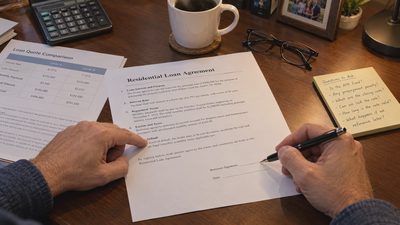
If you have a mortgage, the lender has a financial interest in the property. The home is collateral for the loan, so the lender wants protection if a tornado, fire, or major hail event causes serious damage. That is why most loan agreements require homeowners insurance for the full term of the mortgage.
Your lender will usually ask for proof of coverage before closing. After that, the insurance company may send evidence of renewal directly to the lender. If your policy lapses, the lender can purchase force-placed insurance and charge the premium to your mortgage account. This coverage often protects the lender more than it protects you, and it can cost substantially more than a policy you shop for yourself.
Do you have to have house insurance when refinancing? In most cases, yes. A new lender will normally require active coverage before completing the refinance. The policy also needs to meet requirements for dwelling coverage, deductible limits, and sometimes special protections for flood or wind damage.
What a standard homeowners policy usually covers
A standard policy generally combines several types of protection. Dwelling coverage applies to the house itself, including items such as attached garages and certain built-in systems. Other structures coverage can apply to a detached garage, shed, or fence. Personal property coverage helps replace belongings after a covered event, subject to limits and deductibles.
Liability coverage is another important piece. If a visitor falls on an icy walkway and alleges that you were negligent, the policy may help with covered medical expenses, legal defense, and damages up to the policy limit. Medical payments coverage can handle smaller injury claims without requiring the injured person to prove negligence.
The policy does not cover every cause of damage. Flooding is commonly excluded, and earthquake coverage often requires a separate policy or endorsement. Wear and tear, poor maintenance, and many gradual leaks are also not insurance claims. A roof that simply reaches the end of its useful life is different from a roof damaged by a covered hailstorm.

What happens when you own the home free and clear
If your mortgage is paid off, do you have to have house insurance? Legally, often not. You can generally choose to go uninsured, but that decision shifts every repair and replacement risk to you. A modest kitchen fire can create tens of thousands of dollars in damage. A total rebuild after a major fire can cost far more than the home's current market value, especially when labor and material prices are high.
Going without coverage also removes personal liability protection. If a delivery worker is injured on your property, you could face attorney bills, medical costs, or a settlement from your own savings. Homeowners sometimes focus only on the roof and forget that liability exposure can be just as financially serious.
A paid-off homeowner could consider a higher deductible to reduce the premium rather than canceling the policy. For example, moving from a $1,000 deductible to a $2,500 deductible might lower the annual cost, while preserving protection for a large covered loss. Keep enough cash available to pay that deductible when trouble arrives.
Why roof damage makes this question urgent
Roof claims are a common reason homeowners start asking, do you have to have house insurance after a storm? The answer depends on the policy, the cause of loss, the roof's age, and the adjuster's inspection. Hail or wind damage may be covered, while old shingles, neglected maintenance, or installation defects may not be.
Insurance also does not always pay the entire roofing invoice. You may owe the deductible, and the policy may pay actual cash value rather than replacement cost for an older roof. Actual cash value subtracts depreciation. Replacement cost coverage can pay the recoverable depreciation after repairs are completed, subject to policy terms and limits.
Suppose a contractor quotes $18,000 for replacement and your deductible is $3,000. If the insurer approves the claim at replacement cost, you could still need to budget for the deductible and any excluded upgrades. Financing that gap can be useful, but do not let a contractor promise that insurance will cover work the carrier has not approved.
How to reduce the cost without creating a coverage gap
Start by comparing quotes from several insurers, including independent agents who can access multiple carriers. Ask whether bundling auto and home coverage changes the premium. Review discounts for a monitored alarm, newer roof, impact-resistant shingles, updated electrical systems, or a claims-free history. Discounts differ, but the questions cost nothing.
Then examine the declarations page. Confirm that the dwelling limit is high enough to rebuild the house, not merely match its sale price. A home's market value includes land, while dwelling coverage is intended to address reconstruction. Ask about ordinance or law coverage if an older home would need code upgrades after a claim.
You can also compare deductibles carefully. Some policies use a percentage deductible for wind or hail. A 2% deductible on a home insured for $300,000 equals $6,000, not $2,000. That number deserves a prominent place in your house-repair spreadsheet.

Questions to ask before canceling or changing a policy
Before deciding whether you have to have house insurance, call the lender if a mortgage remains. Ask for the exact insurance requirements and the deadline for providing proof. If the house is paid off, ask an insurance agent to price a basic policy, a higher-deductible option, and any separate flood or wind coverage relevant to your area.
Ask what is excluded, how roof claims are settled, and whether the policy has replacement cost or actual cash value for the dwelling and roof. Ask about liability limits too. Increasing liability coverage from $100,000 to $300,000 may be relatively inexpensive compared with the potential cost of a serious injury claim; an umbrella policy is another option for some households.
Never cancel the old policy until the new one is active. Keep photographs of the roof, receipts for improvements, a home inventory, and copies of declarations pages. Those records can make a claim and a roof financing decision much easier to manage.
The simplest answer to do you have to have house insurance is that a mortgage lender normally requires it, while a homeowner without a loan often has a legal choice. Financially, however, going without protection is a major bet against fire, storms, liability claims, and rebuilding costs. Compare the premium, deductible, exclusions, and likely roof exposure together. Before you sign, make the payment make sense.