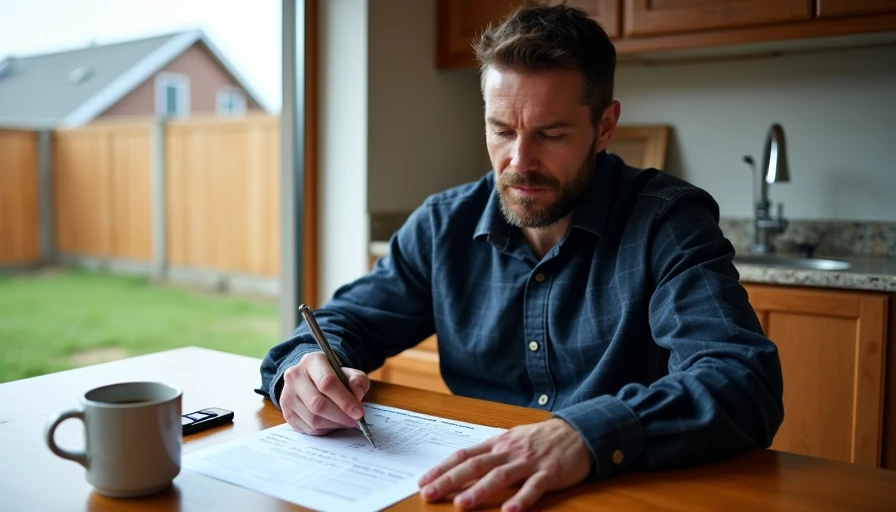
I'm Nathan Whitaker, and I live in Plano, Texas, where hail season rolls through every few springs and turns the neighborhood into a block-long roofing convention. I'm 41, married, two kids in school, and I keep a running "house numbers" spreadsheet for every big repair this house has thrown at us — the way other guys keep batting averages. Before I became the neighbor comparing quotes over the fence, I spent more than a decade as a home improvement financing advisor, helping homeowners understand payment plans for roofing, windows, HVAC, siding, and storm repairs through contractor-partner loan programs. I started this blog because of a scene I watched repeat itself for years: a storm hits, the driveway fills with shingle granules, a contractor shows up with a friendly estimate, and suddenly a homeowner is trying to figure out how to pay for a new roof while sitting in their own living room with a financing flyer and a pen in hand. That is the worst possible moment to learn loan math. This site exists so you can learn it now, calmly, before any roof project begins. The whole philosophy fits in one sentence: the monthly payment is the sales number, and the total cost is the homeowner number.
A Decade of Reading Financing Flyers
For more than ten years I sat on the advisory side of home improvement loans, which meant I reviewed real payment plans for real roofs, window jobs, and HVAC systems before homeowners signed them. I translated APR into dollars, explained what happens when a promotional term ends, and showed people what a dealer fee quietly does to their balance. I did that work long enough to see the patterns clearly — the good plans, the misleading ones, and the thousands of homeowners in between who only wanted one answer: what is this roof actually going to cost me?
What the flyer usually leaves out
A financing flyer almost always leads with the number that sells — the monthly payment. Everything else is smaller print, and some of it is not on the page at all. In my advising years I built a short checklist of what goes missing, and it is remarkably consistent:
The total amount you pay after the very last monthly payment is made.
The APR, which is the true yearly cost of the loan and can sit well above the interest rate quoted in the ad.
Fees folded into the loan balance, like origination or dealer fees, which quietly raise the amount you borrow.
What happens if the rate adjusts, or if a promotional period ends before you finish paying.

The Sales Number and the Homeowner Number
Every financing conversation has two numbers in it, and only one of them usually gets spoken out loud. The spoken one is the monthly payment. It is small, round, and easy to say yes to. The unspoken one is what the roof costs you over the full life of the loan. In all my years of reviewing financing scenarios, the homeowners who ended up unhappy were almost never angry about the roof itself. They were angry that nobody showed them the second number before they signed.
A quick, rough example of how the gap works
Let's use round numbers to make the idea concrete. Imagine an 20 a month for every 356 a month, and over five years you would pay roughly 216 a month, but the total climbs to roughly 4,500 of difference in what it actually costs you. That difference is the price of a lower monthly payment, and it can be a fair trade — if you are making it on purpose. If you are making it by accident because the flyer only ever showed the low number, that is exactly how financing regret starts.
The sales number | The homeowner number |
|---|---|
The monthly payment on the flyer | The total cost across every payment you will make |
The number of months "until it's paid off" | Whether that timeline fits your actual monthly budget |
"No interest if paid in full by the deadline" | The interest you will owe if you are late or short on that deadline |

Payment First, Construction Second
Here is the practical rule I carried out of my advising years: decide the payment before you decide the shingles. The homeowners who struggled financially were not the ones with the biggest roofs. They were the ones who picked a contractor first and then discovered, at the very end, that the financing terms were the most expensive part of the job — right when the pressure to sign was highest. A roof replacement is a big-ticket purchase, and the payment plan riding on top of it is a separate commitment that will live in your monthly budget for years. Plan them together, not in that order.
The three numbers you need before you sign
The total cost of the roof from a written quote, including tear-off, materials, and any upgrades the contractor recommends.
The monthly payment on the terms you were actually offered — not the "as low as" number in the advertisement.
The total cost of the loan, which is what all those monthly payments add up to.
If a contractor cannot or will not put those three numbers on paper, that refusal is information in itself. When I run options for my own house, I take them straight to the spreadsheet. Every big home item in the Whitaker house gets a line — estimated cost, insurance deductible, warranty dates, and what the monthly budget can absorb. When hail finally did a number on our roof, I already knew my number before I ever made a phone call, and that kept the whole conversation calm.
Before You Sign, Make the Payment Make Sense
That sentence is not just a slogan; it is the test every deal discussed on this site has to pass. When you are standing in the yard with gutters full of granules, everything pushes you toward signing fast — the contractor's schedule, the insurance deadline, the weather forecast. I am the voice that says the roof can wait the extra hour it takes to check the math. A roof is a purchase you will live under for twenty or thirty years. The payment plan is a commitment that sits in your monthly budget for the next three to ten. Both deserve the same careful look.
So here is the mission of clearroofloan.com: every article translates financing language into normal numbers — total cost, monthly payment, interest, fees, and the fine print that can change the entire deal. If you take nothing else from this post, take this. Before you sign, make the payment make sense. If the numbers only work when the salesman says them and not when you write them down on your own paper, get another quote. There is always another quote, another lender, and another way to get the roof done right — and figuring out how to pay for a new roof is always easier before you are holding the pen.