
Roof financing sounds like a phrase that belongs in a banker's office, but at the kitchen table it just means one thing: someone else's money is paying for the roof right now, and you are paying them back over time. If the phrase makes you nervous, you are in good company. In my years as a home improvement financing advisor, most homeowners were not afraid of borrowing — they were afraid of not understanding the words on the page. So let's drop the banker language. This is the plain-English version of roof financing, the way I explained it across fences and kitchen tables for over a decade: who offers the money, what each option really costs, and which terms you will actually see on the contract in front of you.
The Main Ways Homeowners Finance a Roof
There is no single product called a roof loan that everyone uses. What you will actually find are a handful of routes, each with its own lender, its own cost structure, and its own trade-offs. Understanding them by their real names is the first step to comparing them fairly. Over the years I saw homeowners choose well and choose badly through every one of these doors, and the door matters less than the terms waiting behind it.
Personal loans from banks and credit unions
A personal loan is money you borrow from a bank, credit union, or online lender, usually in one lump sum that you can spend on the roof. Because the loan is unsecured — nothing ties it to your house — the lender looks hard at your credit and income. A credit union where you already bank is often the most patient lender in this group, since it knows your history. The trade-off is straightforward: if the loan is not tied to your home, the lender charges more for the risk, and the rate can swing widely with your credit profile.
Contractor-offered financing and promotional plans
When a roofing contractor says "we can finance that for you," they are almost always partnering with a lending company that specializes in home improvement loans. The contractor is not the lender — a separate finance company is. These plans are convenient because you apply at the kitchen table, and many advertise promotional deals like deferred interest or a reduced rate for a set window. The fine print lives in that window: what happens if the balance is not paid off before the promo ends, and whether the contractor padded the job price to cover the lender's fee. Both are questions worth asking out loud.
Home equity loans and HELOCs
If you have owned your home for a while, your roof might be replaceable with a home equity loan or a home equity line of credit (HELOC). These are secured by your house, which usually means lower rates than unsecured borrowing, and the interest may be tax-deductible in some situations. The catch is the collateral: your home is on the line if payments fall behind. A HELOC works like a credit card you draw from as needed; a home equity loan arrives as a single check with fixed payments. Both take longer to set up than a personal loan because the lender appraises and underwrites against your home.
Credit cards, savings, and the other options
Some homeowners put a smaller roof repair on a credit card, especially one with a zero-interest balance transfer or an introductory window. That can work if the balance gets paid before the window closes; if it does not, the interest can be punishing. And there is the option nobody needs a lender for: paying from savings. It removes the payment entirely, and after a hail season it is the route I hear the most gratitude about — though it only works if the money was already set aside.
The Loan Words You Will Actually See, Translated
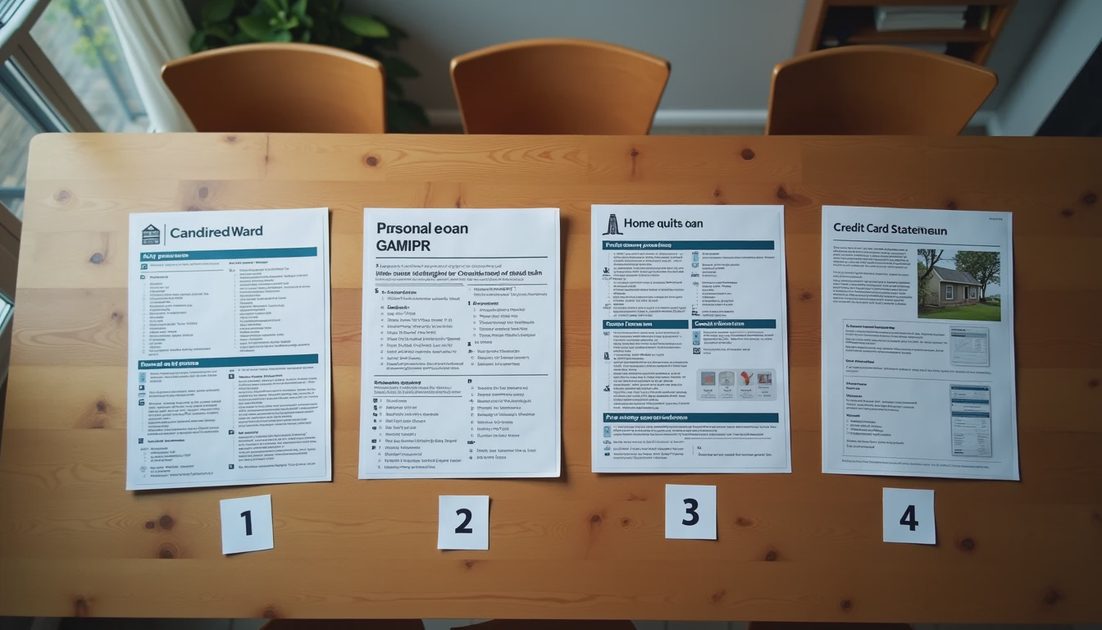
Every financing document uses the same vocabulary, and none of it is complicated once someone translates it. Here is the short glossary I used to walk clients through. If you understand these five terms, you can read almost any roof financing contract well enough to ask the right questions.
APR: the yearly cost of the loan expressed as a percentage, including interest and most fees. It is the number to compare between lenders.
Loan term: how long you have to repay, usually 24 to 120 months for roof loans. A longer term lowers the payment and raises the total interest.
Origination or dealer fee: an upfront charge, sometimes added into the amount you borrow, which raises what you actually repay.
Secured vs. unsecured: secured means the lender can claim collateral — often your home — if you stop paying; unsecured means they cannot take your house, which is why unsecured rates run higher.
Lien: a legal claim recorded against your home when you borrow against it, giving the lender rights until the debt is paid.
APR is the real price tag
The interest rate on the advertisement is not the APR, and the difference can cost you hundreds of dollars. The APR bundles the rate with most of the lender's fees, so it reflects what the loan genuinely costs you in a year. Here is a homeowner-sized example: suppose you borrow $15,000 for a roof at a quoted rate of 6%, but the APR comes to about 8% once fees are included. The rate told you one story about the price; the APR told you the fuller one. When lenders quote you a plan, ask for the APR in writing, not just the rate.
What "secured" means when your house is the collateral
When a loan uses your home as collateral, the lender holds a lien on the property until the debt is settled. Home equity products work this way, which is why their rates tend to be lower — the lender has a way to recover the money if you default. A contractor-offered plan or a personal loan usually does not touch your home, and that separation is worth something, even if the rate is higher. I have sat with homeowners who did not realize until closing that their "roof loan" carried a lien against the house. Read that sentence in the contract before you sign, not after.
How the term quietly changes the math
The loan term is where most homeowners get surprised, because the monthly payment hides the total. At roughly 7% APR, every 20 a month; stretch the same 12 a month. That longer term feels lighter every month and heavier in total — you pay interest for twice as long. Neither choice is wrong on its face; the wrong choice is the one you never consciously made.

Comparing Your Routes Side by Side
Before you pick a route, put them on one page. The table below is for comparison, not for quotes — rates and terms move with the market, your credit, and the lender, so treat every range as an illustration of the shape of each option, not as a promise. The "roughly" matters.
Financing route | Who offers it | Illustrative rate range | Typical term | Is your home collateral? | Speed |
|---|---|---|---|---|---|
Personal loan | Banks, credit unions, online lenders | Roughly 8–18% APR, varies by credit | 24–84 months | No | Days |
Contractor financing | Contractor's lending partner | Roughly 7–20% APR, promo rates vary | 12–120 months | No (check contract) | Same day to days |
Home equity loan / HELOC | Banks, credit unions | Often lower than unsecured, illustrative 6–10% APR | 5–30 years | Yes | Weeks |
Credit card | Card issuer | Varies widely; intro windows common | Revolving | No | Immediate |
Savings | You | No interest — you pay yourself back | Whatever you choose | No | Immediate |
Roof Financing Is Just a Tool — Match It to the Job
Roof loans and the other routes above are tools, no better or worse than a hammer that way. A contractor-offered plan with clean terms can be the easiest way to get a storm-damaged roof covered quickly. A home equity line can be the right fit for a homeowner with long equity and a steady income. A personal loan from a credit union can beat both if the rate comes in lower. The tool that works is the one that fits your credit, your budget, and how long you want to carry the payment — not the one that was pitched to you with the most enthusiasm.
Three questions before you commit to any route
What is the APR in writing, and does it match what was quoted out loud?
What is the total cost of the loan, not just the monthly payment?
Does this loan put a lien on my home, and what happens if I miss a payment?
Ask those three questions of every lender, and you will be comparing roof financing honestly for the first time. Before you sign, make the payment make sense. If the numbers do not survive a conversation at your own kitchen table, keep shopping — there are more lenders and more roofs where that quote came from.