
When a hailstorm or a failing shingle finally forces the conversation, most homeowners I talk to end up standing between the same two doors: a personal loan from a bank or credit union, or the roof replacement financing plan the contractor lays out on the kitchen table next to the estimate. I spent more than a decade advising homeowners through both kinds of loans, and I have walked neighbors through the aftermath of each when the fine print bit. So here is the honest headline: roof replacement financing can work fine through either route, and both options have quietly cost homeowners real money when they signed without pricing the other side first. The goal is not to crown one winner. The goal is to price both routes on the same roof before you commit to a single signature.
Two Roads, Same Roof, Very Different Fine Print
The two options can put identical shingles on the same house, but underneath they are different products, and the differences show up in who lends the money, what the loan can cost, and what you risk if something goes wrong a year from now. Choosing roof replacement financing is really two decisions stacked together: which roofer does the work, and which loan product carries the bill.
Where the Money Actually Comes From
A personal loan comes from a bank, credit union, or online lender that you choose. You borrow a lump sum, the money lands in your account, and you pay your contractor like any other bill. You own that loan relationship from day one, and you can take the quote anywhere.
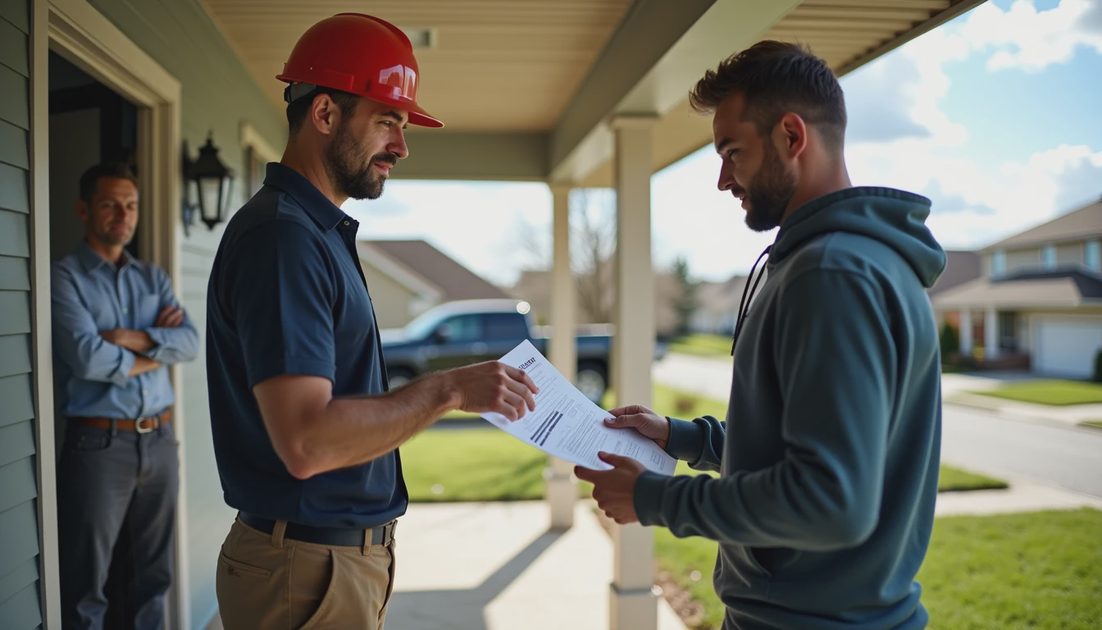
Contractor financing for roof replacement works the other way around. The contractor has a partnership with a lending company, you apply through that partner at the kitchen table, and the lender often pays the contractor directly once the work clears inspection. The loan is real, but you may never meet the lender, and the company holding your note is whatever partner your contractor happens to work with that month.
That difference matters more than most people expect, because it changes who you are negotiating with if something goes wrong. It is also why roof replacement financing decisions should never be made on the spot. A quick snapshot of the two routes:
Personal loan: a lump sum from a lender you pick; you pay the contractor directly; it is typically unsecured, so your home is not used as collateral; the APR and payment are set before any work starts.
Contractor financing: a loan from the contractor's partner lender; you apply on site; the lender often pays the contractor; promotional offers may be available, but the rate you get is whatever that lender assigns to your credit profile.

The Quiet Differences That Decide What It Costs
On paper, both routes end in a monthly payment. In practice they differ in fees, in how the interest rate gets set, and in what happens to the loan if the roofer disappears from the phone book. And every roof replacement financing quote deserves that same scrutiny, whether it comes from a bank or from the contractor's lending partner.
The Dealer Markup Nobody Mentions
Lenders give contractors a wholesale rate and allow them to sell it to you a little higher. That gap is the dealer markup, and it is a normal part of how contractor financing works. It is also why the same credit profile can be quoted a higher APR through a roofing company than at the credit union down the street. A markup is not automatically a bad deal — it helps pay for the convenience of finishing everything in one afternoon — but it is a real cost, and it is worth asking about in plain words before you agree to anything.
If the Roofer Goes Out of Business
People assume the contractor and the lender are the same company. They are not, and that distinction matters. With a personal loan, if the roofer closes up mid-job, your dispute is with the contractor, and your loan sits with a bank that had nothing to do with the workmanship. You still owe the payment, but you kept control of the money and the remaining balance, which gives you leverage in a dispute. With contractor financing, the lender can pay the contractor before you ever see a loan statement. If that contractor shuts down, the loan does not disappear, and any workmanship warranty tied to the company can become very hard to enforce. You owe the money in both scenarios; the difference is how much leverage you kept for yourself. It is also worth asking whether the plan files a UCC statement against your roof or home — some contractor financing is structured as a secured loan even though it never feels like one at the sales table.
The Same $16,000 Roof, Priced Both Ways
Let me make this concrete with a roof similar to what my neighbor priced last spring. These are illustrative numbers to show the comparison, not a quote — rates vary by lender, credit, and market. The job came in around $16,000.
Route | Illustrative terms | Approximate monthly payment | Rough idea of total cost |
|---|---|---|---|
Personal loan | $16,000 at about 7% APR for 60 months | roughly $320 a month | about $19,200 over the life of the loan |
Contractor same-as-cash plan | 0% for 12 to 18 months, then a regular APR (often high-teens) if anything is left | $0 in interest if paid inside the promo window | the full $16,000 if paid on time; interest can be charged back to day one if the deadline slips |
The exact same 16,000, or well north of $19,000, depending on the route and on how the promotional window is handled. That spread is the entire reason to price both sides before you choose one. In roof replacement financing, the tool never sets the price — the terms do.
Questions to Ask Before You Pick One
Ask each side its own set of questions. For roof loans from a bank or credit union:
What is the APR — not just the advertised payment?
Is there an origination fee, and does it get added to the loan amount?
Is there a prepayment penalty if I pay the loan off early?
For contractor financing for roof replacement, add these five:
Who is the actual lender, and are they licensed to lend in my state?
Is the rate I am being quoted marked up above the wholesale "buy rate"?
If this is a promotional offer, what is the regular APR, and does interest get charged back to day one if the balance is not paid by the deadline?
Is this loan secured by a UCC filing or a lien on my home?
If the contractor goes out of business, who honors the workmanship warranty?
Price Both Routes Before You Pick One
Here is my practical stance after a decade of watching this play out: both tools are legitimate, and I have seen Texas homeowners use each one well. A personal loan keeps the roofing bid separate from the lending decision, which is a genuine advantage when you want to compare quotes between contractors. Contractor financing can be genuinely convenient, especially when a promotional window lines up with your budget — as long as you know the rate you will fall back on if the window passes. But the contractor's convenience can carry a price, and that price is easiest to miss in the exact moment it is being sold: when you are tired, the roof is leaking, and everyone at the table wants your signature. The homeowner who compares roof replacement financing the way they compare contractors — on paper, at home, without the pressure of the moment — is the one who gets the sane terms. Before you sign, make the payment make sense.